How to Get to the Vittoriano and Find the Entrance
Navigate to the Vittoriano at Piazza Venezia, locate the main and accessible entrances, and connect the visit with central Rome on foot.
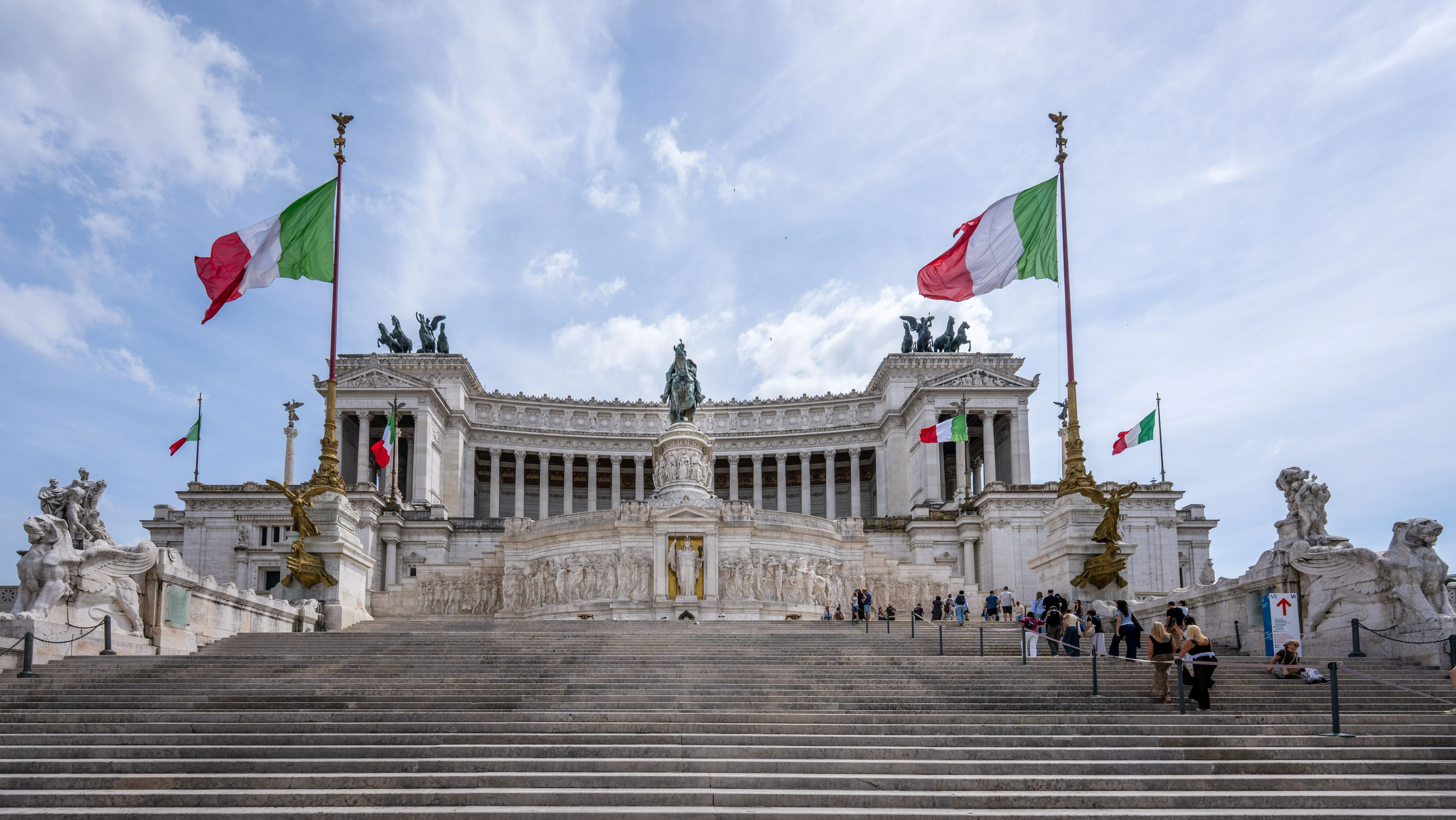
The Vittoriano is difficult to miss but surprisingly easy to approach from the wrong side. It dominates Piazza Venezia, where several major roads meet, yet the square carries heavy traffic and current transport patterns can change with road works. The simplest rule is to aim for the monumental front facing Piazza Venezia, then use marked pedestrian crossings rather than following the most direct-looking line through traffic.
The main visitor entrance
Official VIVE guidance places Vittoriano access at Piazza Venezia. The central stairway leads toward the Altar of the Fatherland and free exterior route. Admission to the Central Museum of the Risorgimento and Panoramic Terrace also begins through the main Vittoriano entrance, with signs directing visitors upward.
The on-site ticket office is on Terrazza Italia rather than at street level. Visitors holding an official online ticket should follow its instructions. Third-party vouchers sometimes require exchange at an external office, so check the meeting point instead of assuming every barcode is scanned at the front steps.
Accessible entrance
The step-free route begins on the Aracoeli side of the monument. VIVE states that this entrance has a wheelchair platform lift and an internal lift to Terrazza Italia. From there, two panoramic lifts continue to the summit. Courtesy wheelchairs are available at this side entrance, subject to availability.
This route is also relevant for strollers and people who cannot manage the long stairways. Because circulation can change during events or works, contact VIVE in advance for a specific need and ask security staff on arrival rather than trying to improvise between terraces.
Arriving on foot
Walking is often faster than transferring between short public-transport legs. Approximate routes are straightforward:
- From the Capitoline Museums, descend toward Piazza Venezia; the monument is immediately adjacent.
- From the Roman Forum, follow Via dei Fori Imperiali northwest toward the white monument.
- From the Pantheon, walk through the lanes toward Via del Plebiscito and Piazza Venezia.
- From the Trevi Fountain, approach via central streets and allow extra time for crowds.
- From the Colosseum, the largely direct Via dei Fori Imperiali route also provides the most dramatic approach.
Use a current map for crossings. Piazza Venezia is not a place to take shortcuts, and temporary construction can move bus stops or pedestrian channels.
Metro and buses
Metro C's Piazza Venezia station remains under construction in 2026 and is not open. Colosseo on Line B and stations serving the historic centre can be useful starting points, followed by a walk. Which is best depends on your origin and current works.
Numerous city bus routes traditionally serve Piazza Venezia or nearby streets, but route numbers and stop locations are operational details that can change. Consult the official Roma Mobilità or ATAC journey planner on the day rather than relying on an old list. Build in a margin if you have a timed rooftop entry.
Taxi and private drop-off
Ask for Piazza Venezia or the Vittoriano, but expect the vehicle to stop where traffic rules allow rather than at the foot of the stairs. Visitors requiring the accessible side should specify the Aracoeli side and confirm a safe drop-off with the driver. Central road restrictions mean a private car is usually less convenient than walking or public transport.
Orientation once you arrive
The large white façade faces west-northwest across Piazza Venezia. Santa Maria in Aracoeli and the Capitoline Hill lie to the monument's left when viewed from the square; the route toward the Imperial Fora runs along the opposite side. Palazzo Venezia, included in the combined ticket, stands across the piazza and has separate entrances at Via del Plebiscito 118 and Piazza San Marco 49.
Do not confuse the two venues. The Vittoriano ticket office and lifts are within the monument; Palazzo Venezia is a distinct historic palace. The current seven-day combined ticket makes crossing immediately unnecessary.
Build an arrival around central Rome's geography
The most pleasant approach depends on the preceding stop. From the Colosseum, Via dei Fori Imperiali supplies a direct visual line but little shade. From the Pantheon, the route through Via del Plebiscito is shorter and more enclosed. From the Trevi Fountain, narrow streets eventually open abruptly onto the traffic of Piazza Venezia. From the Capitoline, the destination is adjacent, although changes of level can matter for anyone avoiding stairs.
Walking times shown by mapping apps are estimates and may not reflect temporary barriers around transport construction. Metro C's Piazza Venezia station remains under construction in 2026 and is not a functioning arrival option. Use current ATAC and Roma Mobilità information for buses because stop positions and diversions near the works can change faster than editorial guides.
Finding the correct side without unsafe shortcuts
When facing the monument from Piazza Venezia, the principal ceremonial stair is obvious; the accessible Aracoeli-side approach is not. Follow signed pedestrian routes around the monument and ask uniformed staff rather than crossing vehicle lanes or attempting a staircase with a wheelchair or stroller. The Aracoeli entrance uses a wheelchair lift and historic internal lift before the panoramic elevators.
Allow extra time if carrying a bag. Current rules exclude items larger than 40 × 35 × 15 centimetres, and the Vittoriano should not be treated as a luggage-storage stop between hotel check-out and a train. Photography equipment also needs planning: flash, tripods, monopods and selfie sticks are not admitted for ordinary personal use.
Leaving in the right direction
An exit can place you differently from the entrance because visitor circulation is one-way. Reorient before starting the next booking. The Capitoline and Aracoeli are the natural uphill continuation; Trajan's Forum and Via dei Fori Imperiali lead toward ancient Rome; Via del Corso leads north; Via del Plebiscito points toward the Pantheon district. This small pause prevents an unnecessary circuit around one of Rome's busiest junctions.
A useful arrival sequence
Approach from the centre of Piazza Venezia's pedestrian edge for the full frontal view, enter through security, inspect the altar and memorial, then choose either the museum or roof according to weather. Leave toward the Capitoline for ancient Rome, toward Via del Corso for the historic shopping axis, or across to Palazzo Venezia for the Renaissance collection. This turns a complicated traffic junction into a clear transition between parts of the city.
Yazar hakkında

Rome Visitor Guide
Bu bağımsız rehber, ziyaretçilerin ücretsiz giriş ile biletli deneyimleri ayırt edebilmesine yardımcı olmak amacıyla VIVE, İtalya Kültür Bakanlığı ve müze bilgilerinden derlenmiştir.
Tags
Comments (0)
Loading comments...